
Published: November, 1965
“Sometimes the Good Guys Lose!”
Script: Stan Lee
Layouts: Jack Kirby
Art: John Severin
Letters: Sam Rosen
“If Eternity Should Fail!”
Plot: Steve Ditko
Script: Stan Lee
Art: Steve Ditko
Letters: Sam Rosen
Over the last several years I have become highly attuned—more than I would like—to psychological terms such as sociopath, narcissist, borderline delusional. Very often, while reading these Marvel Comics from the 1960’s, I can’t help but see correlations between these “mere stories” and our real world situation. Is this a case of life imitating art, or art imitating life? No doubt these concepts have always been with us, and what I’m reading in Strange Tales #138 is “just another brick in the wall.” It might be an imaginary wall, but in deference to how readily art and life imitate each other, I’d like to take a moment to examine some of those bricks.
IMPERIAL HYDRA
I’ve only known Imperial Hydra for a couple issues, and I haven’t yet completely formed my opinions about who he is and what he’s up to, but this much seems clear: he’s a sociopath.
So. What exactly is a sociopath?
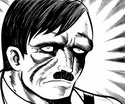 Apparently, this isn’t a technical or medical term. Doctors call it “antisocial personality disorder.” As per webmd.com, and healthline.com, some of the main characteristics of people with this disorder include the fact that, although they can be “witty, charming, and fun to be around,” they also:
- lie, manipulate, control and exploit others
- find it difficult to understand other people’s feelings
- appear uncaring, don’t show remorse for their actions
- break rules or laws
- behave aggressively, impulsively, destructively
- feel little guilt for harm they cause others
Except for that bit about being “witty, charming, and fun to be around,” Imperial Hydra presents a textbook example.
ANIMALS
These thoughts began to build when I met him in the previous issue, but in this installment, it’s telling that he most strongly identifies with his pet panther, rather than any of the people he interacts with. I found it a bit shocking when he tells his big blue cat that he has seized the world, “just as you would seize a helpless hen!”
Strength and power are all that matter to him, and because he has no conscience, he never even considers that there is anything strange in comparing himself to an animal. (It also doesn’t occur to him that animals kill for food, not sport, and certainly not for ego, pride or world domination.)
So ironically, while he most strongly identifies with this dumb animal, he is in fact nothing like an animal. Any animal is surely more noble.
I just finished having these thoughts about Imperial Hydra, when I come to the next page and discover he has also named all his Hydra chiefs after animals, believing this furnishes them with “a feeling  of identity…a sense of pride.” First, I’m thinking… where is the pride in being a mole or a beaver? But next: Are you kidding me? What are we, in kindergarten??
In the real, adult world, comparing human beings to animals is not usually considered a compliment—excepting sports teams, of course. If anyone has an antisocial personality disorder that causes them to relate more strongly to animals than human beings, well frankly, that’s…sad. When this is the case for someone in a position of leadership, it can be downright dangerous.
THERE’S NO TALKING TO THIS GUY
Imperial Hydra clearly displays seriously stunted psychological growth, emotional problems, and is perhaps even unhinged from reality.
 But he also has a daughter, an attractive young blonde who cares about him, providing a gentle, quiet voice of reason, trying to draw him away from his maniacal madness.
Disappointed in her father’s continuing quest for world dominance, daughter dearest laments that she’d “hoped til the very end that you’d come to your senses!” Of course he hasn’t. Not only is he incapable of seeing reason, he is also so offended at her disloyalty that he orders her out of the room.
MINIONS
When Imperial Hydra sets the enormous Betatron Bomb in orbit, Fury notes that as panic breaks out across the earth, “you can bet there’s a Hydra hood fanning the flames.” In fact, loyal Hydra minions are facilitating Imperial Hydra’s agenda. Which makes me wonder: 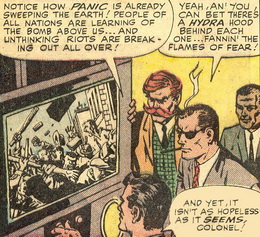 are they also sociopaths, or are they simply poor lost souls, sick of the status quo and seeking to be a part of something bigger than themselves? (Then again…maybe it’s just a paycheck?)
NOT YET CONVINCED
So I don’t understand the fealty of the minions, and as I mentioned last month, I’m also not yet convinced Imperial Hydra is who the writers want us to believe he is.
They are clearly pointing us in the direction of Leslie Farrington, newly elected Chairman of the Board for “Imperial Industries International, one of the wealthiest, most powerful corporations on earth.” And at first glance, Farrington fits the bill as a sociopathic leader.
After one Board Member whispers to another that Farrington has dictatorial tendencies, Farrington immediately proves it by bombastically booming to another Board Member, “I insist you cast your vote with the majority!”
Helloooo! Didn’t we just talk about “breaking rules and laws”? Isn’t it the law that one person gets one vote, it’s their own vote, and no one can take that away from them? In civilized society it is (or at least, most of us try to ascribe to this philosophy), but Farrington obviously doesn’t know how that works…or, he knows, but he simply doesn’t care. In true sociopathic fashion, the rules don’t apply to him. As long as he gets what he wants, he doesn’t care what he has to do to make it happen.
Of course, that bit about the “dictatorial tendencies” is obviously there to make us believe Farrington is indeed Imperial Hydra. But I noticed in the last issue that both Farrington and the mysterious “Brown” were the last two people in the room before one of them goes through a secret passage and transforms into Imperial Hydra. So, despite Farrington’s obvious dictatorial leanings, I suspect Brown may be Imperial Hydra.
After all, where does it say that you can’t have two bad guys in one room at the same time? Just because one has dictatorial tendencies doesn’t necessarily mean he’s the sociopathic leader. There are bad guys…and then there are WORSE guys.
In real life, we have both. And that’s unfortunate. But in storytelling, having multiple levels of bad guys can actually be a very good thing.
 STRANGE HIEARCHY
Which brings me to the latest installment of our ongoing Doctor Strange story. Because, after I marveled over the oddly compelling art (as Russ puts it, “It looks like Dr. Seuss and Salvatore Dali had a baby together”), what most strikes me is the hierarchy of power on both sides of this epic skirmish.
UNQUESTIONABLE?
Doctor Strange is the disciple of the Ancient One, who shows reverence to Eternity. So when Strange finally meets Eternity, he understands this entity to be so much more powerful than himself, and shows proper respect. When Eternity tells Strange to shut up and listen, he does, with no attempts to engage in conversation, though surely he must have many questions.
OTHERWORLDLY SOCIOPATHS
Though the villains in this Doctor Strange story are not as clearly sociopathic as Imperial Hydra, they also follow a hierarchy of power and privilege. It’s not a large leap to say that Mordo is a sociopath, but what about Dormammu, who is clearly pulling Mordo’s strings? Also a sociopath? Also on track for world domination, with no concern for who gets hurt, along the way? The ends justify the means?
And who is greater than Dormammu? Apparently Dormammu is aware that he is not as great as Eternity, for by the end of this issue, his new objective is “If Dr. Strange truly found Eternity, I must make him reveal what he learned!”
But…could it actually be that Eternity is a villain? An even higher step in this hierarchy of villains?
Wait. Why am I even asking that?
MANY QUESTIONS
Let’s take a step back. In their rather one-sided conversation, Eternity imparts a rather cryptic message to Dr. Strange:
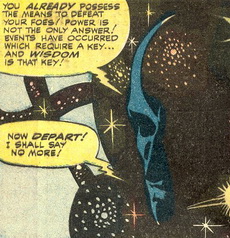
Now, Strange is no dummy, but he is clearly unsatisfied with this answer. He actually wonders if perhaps Eternity lied to him. (“What if he LIED? What if he couldn’t…or wouldn’t help me?”)
I’ve been following Dr. Strange for a long time now, and I trust him. So if he has questions, I have questions too.
Why would Strange trust a liar? And why should we?
My first inclination, of course, would be to trust that Eternity is who he says he is, since he comes so highly recommended by the Ancient One. But in a world where nothing may be as it seems, and having so little information about Eternity at this point, and also keenly disturbed that my hero Dr. Strange is entertaining doubts about this cosmic entity, am I wrong to hold off judgement, until I know more?
After all, when we live in a world full of sociopaths who routinely practice manipulation and deceit, who or what can be trusted? Isn’t the danger of the sociopath that they confuse and muddle so badly in order to break down our faith in reality and accepted institutions so that we no longer have any idea “which way is up”?
But maybe I’m not talking about Marvel Comics any more.
| Want to read this comic on your computer? Marvel has a scan! Want to own the SHIELD story? Buy the Masterworks! Want to own the Doctor Strange story? Buy the Masterworks! |
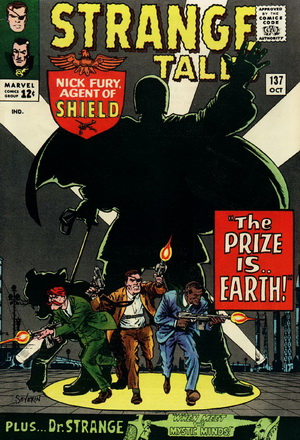 “The Prize Is…Earth!”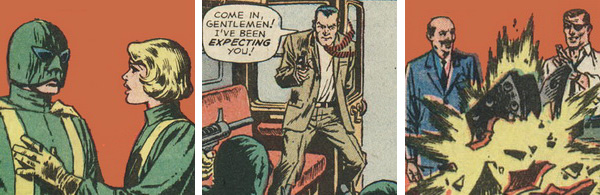
 “When Meet the Mystic Minds!”
 “A Prince There Was!”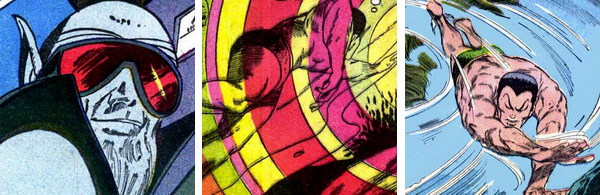
 “Within the Monster Dwells a Man!”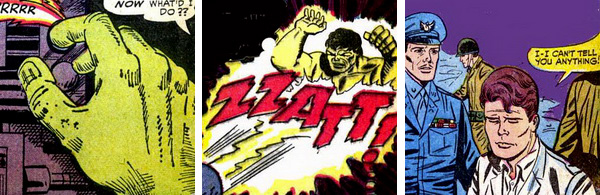
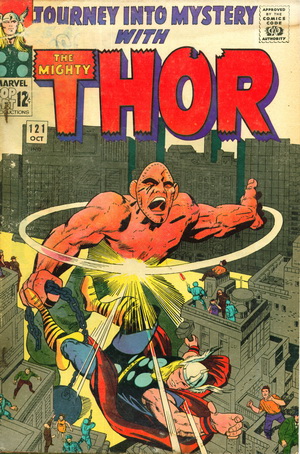 “The Power! The Passion! The Pride!”
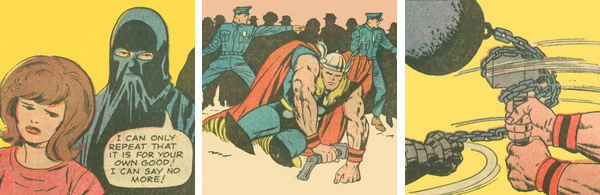
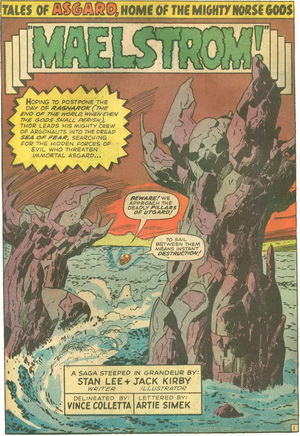 “Maelstrom!”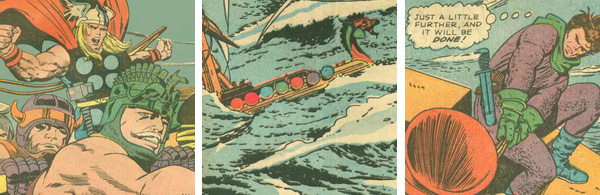
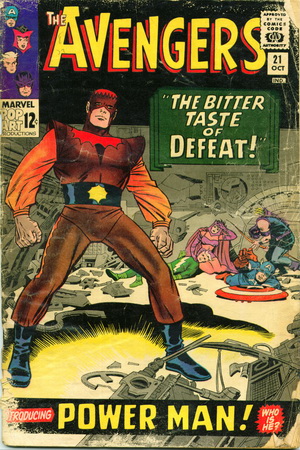 “The Bitter Taste of Defeat!”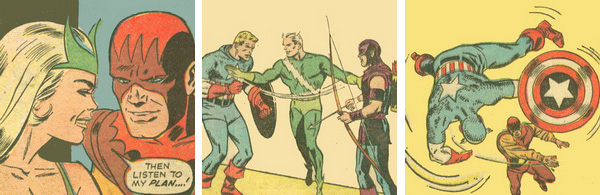
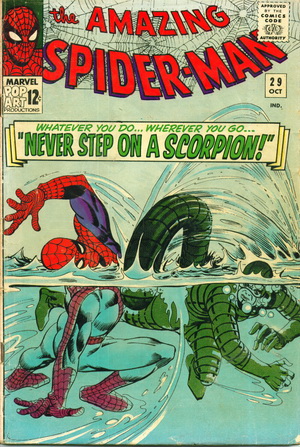 “Never Step on a Scorpion!”
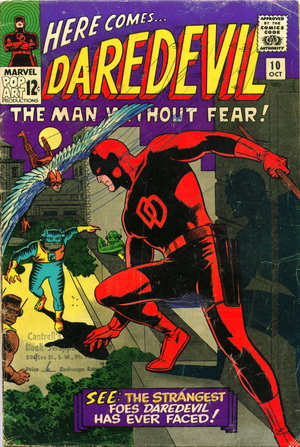 “While the City Sleeps!”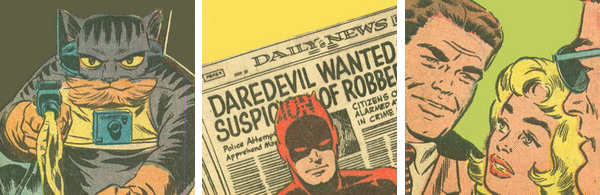

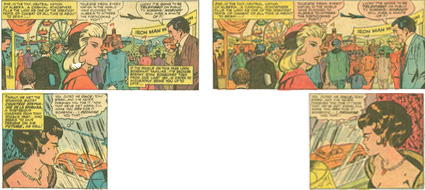
 As Iron Man and Titanium Man battle, the crowd watches on “a special T.V. complex.” Why are so many people gathered in this carnival atmosphere to stare up at teeny tiny television monitors. Wouldn’t they have been more comfortable at home?
 characters cannot wrap their minds around what is so painfully obvious to us readers or viewers. I’ve been anxiously waiting for someone, anyone, to come to this oh so obvious realization.
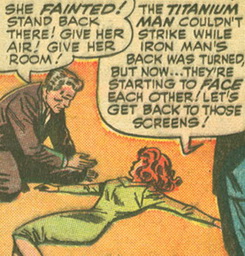 point about Tony Stark. Like a true politician, he easily twists every event to suit his own agenda. As one of our own recent politicians used to say so often: “Disgraceful!”
 If Stan Lee, is he knowingly making this mistake? Is this the way Stan talked? Or is this only the way he imagines Tony Stark would talk? (Because, of course, cultured people would never use such a plebian word as “me.”)
 AND YET…before I was done, my expectation that this might turn out a big, fat “NOT” was twisted around to become extremely “HOT!” The splash implies that there was nothing “more” important going on here than the battle between Iron and Titanium, but in fact, so much “more” happens. Stan is usually the superb showman who easily identifies the most compelling reason to buy the book. But in this case, he missed the boat.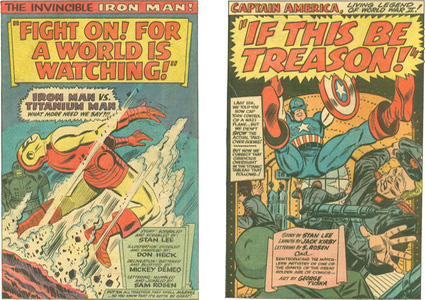
 “Look, we don’t have time for any of that fancy-shmancy artsy stuff, just give us some clean images, and give ’em to us by Tuesday!”
 SLOW ON THE UPTAKE
 And it’s that “matter of degree” that makes me quite certain I am not approaching these Silver Age comics the same way as the audience of the day. Certain aspects of these stories interest me far more than others, and surely my focus is not on the same things that most interested the boys buying these comics back in the 1960’s.
 Likewise, Russ endured Pride and Prejudice and then the BBC miniseries Emma, and the next time I choose a Jane Austen adaptation, though he will not jump for joy, neither will he balk. In both cases, our worlds, our minds, expand. But on our own, we will most likely be magnetically drawn back to those genres with which we feel most comfortable.
 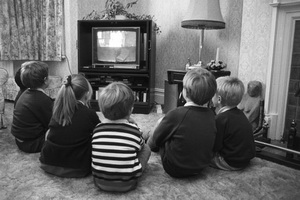 that needs to be recalled, one thing I’m extremely grateful for in any serial TV show is the leading recap: “Previously on…” Because very often, until I see the recap, my mind is so foggy, I can’t accurately and completely remember what happened, last time. Not big fans of “binge watching,” Russ and I rotate five or six shows at a time, watching the same show every Monday, a second series every Tuesday, the latest Marvel offering on Disney Plus every Wednesday, et cetera—the way, to our old-school way of thinking, you’re SUPPOSED to watch television!! So yeah, a lot of time, and a lot of entertainment, often separates one episode of a series from the next before we get back to it. Very often, until I see the recap, I can’t accurately and completely remember on my own what happened “previously.”
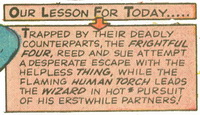 So, Doom left me perplexed, but the 34-word recap on the splash set the stage well enough for me to continue. Thank you, Helpful Stan! However, one thing I don’t really need that much help with is the psychological state of our characters. I easily remember those events that are instrumental in what is going on in their emotional lives. Why is the superhero doing this? What childhood event keeps coming back to haunt him? How did the villain get to be such a miserable excuse of a human being? And when is lover boy finally going to propose to the sweetheart he so obviously adores?
  But wait…there’s more! Because at the bottom of that page, as Mister Fantastic and Invisible Girl face the Frightful Four, he puffs out his chest and boasts, “Even single-handedly I’ll outfight all FOUR of you!” At which point Sue, who happens to have powers of her own, by the way, and is standing right next to him, feels compelled to say… uhhh, Reed, honey…“Not single-handedly, my darling! I’m at your side.”
 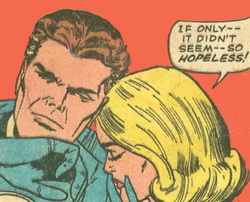 and Bucky for wanting to defend their country, none of that is in my personal DNA. Likewise, the belly-bumping contest currently going on in The Avengers, while amusing, is not a mindset or activity I’ve ever seriously found myself inclined towards.
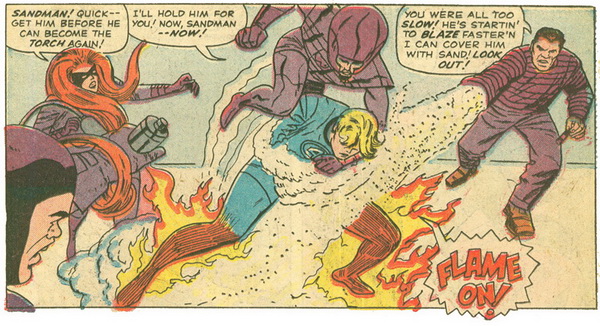
 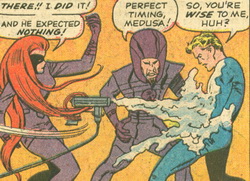 That moment of hesitation in Johnny’s character is more interesting to me than all the fighting that went on in the past two issues of this story.
 READ, ABSORB, REPEAT
 Doom shows up. And if he’s feeling very generous to the female readers he doesn’t even realize he’s going to have in the future, he’ll continue to pepper these tales with the full scope of human emotions that are surely the reason why Marvel Comics has, in fact, survived and thrived for over sixty years.


